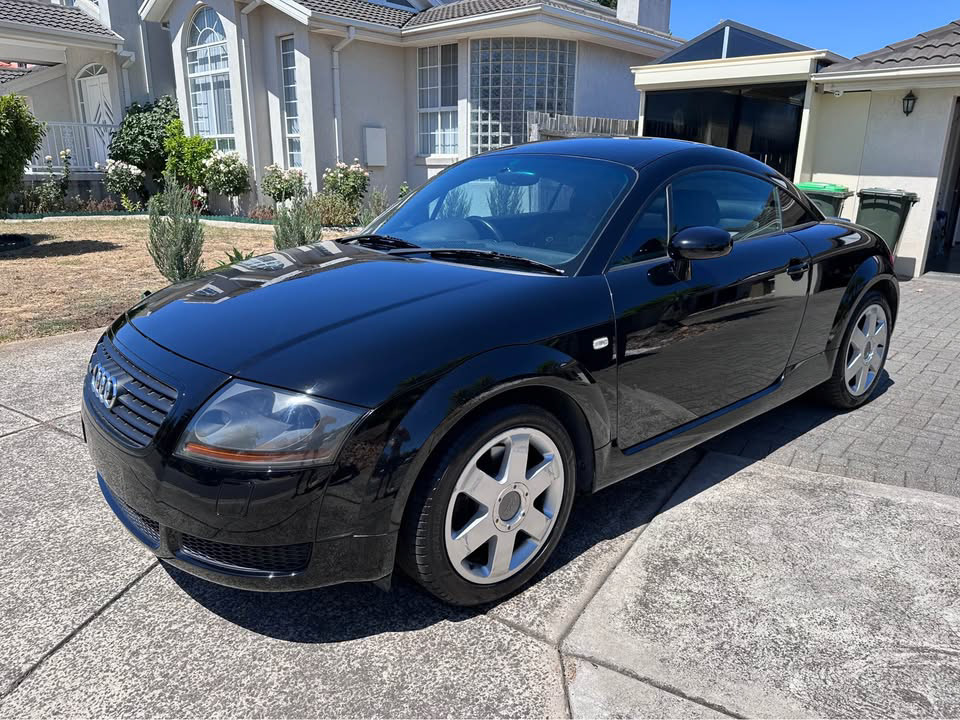
Model: TT Quattro
Year: 2002
Built: Győr, Hungary
Engine: 1,781 cc turbocharged BAM engine / 165 kW at 5,900 rpm / 280 Nm
at 2,200–5,500 rpm
Colour: Brilliant Black – LY9B
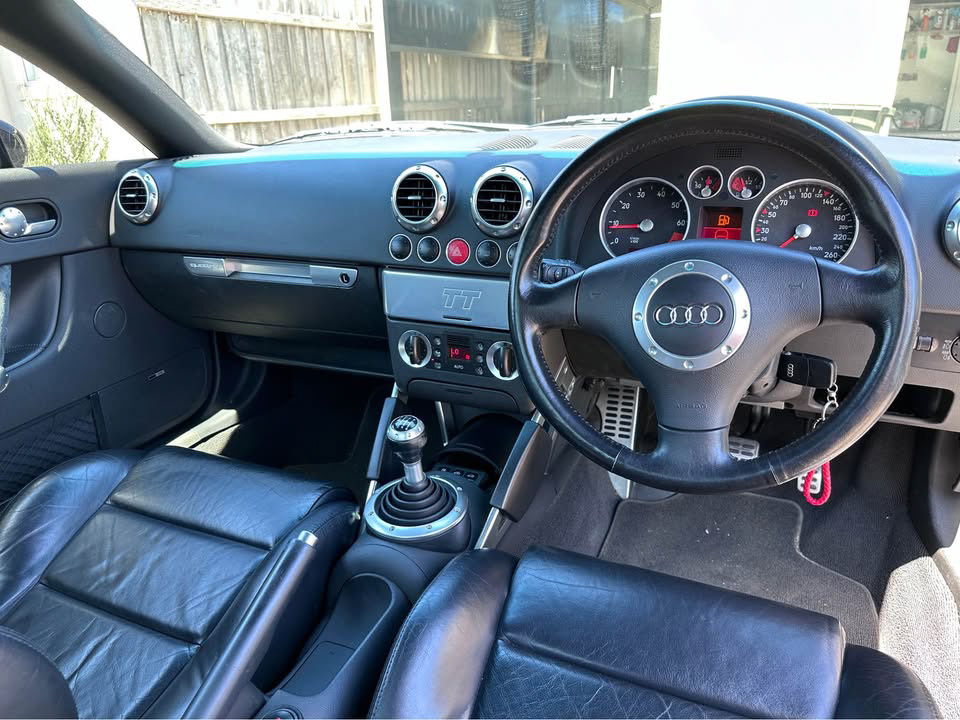
Interior: Black Fine Nappa leather
Status: Undergoing restoration for shows and club registration

Vehicle History
Restoration currently underway
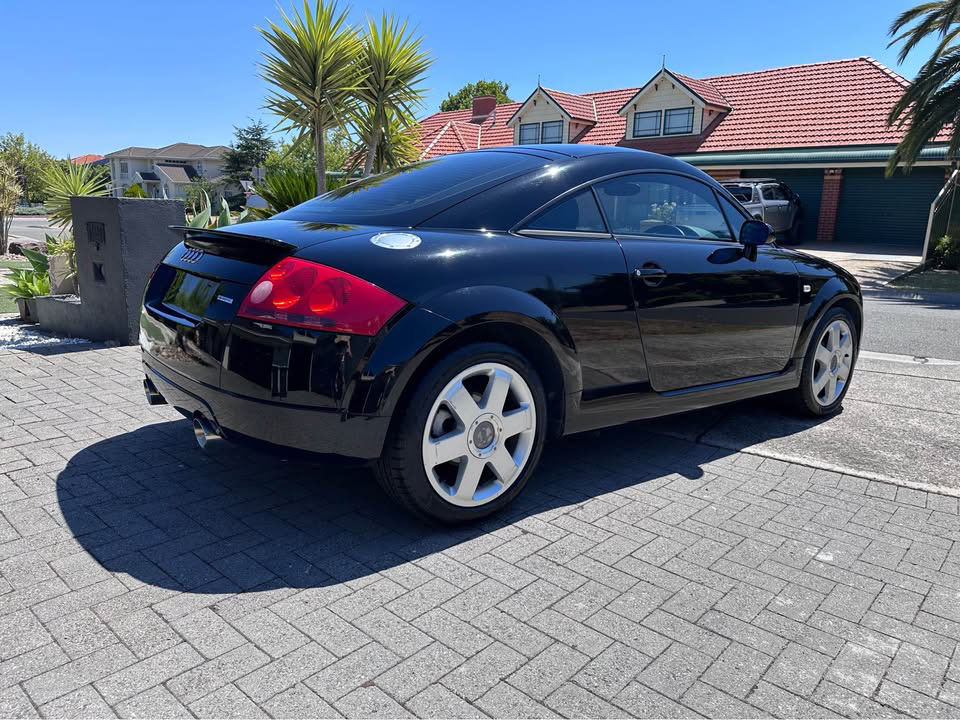
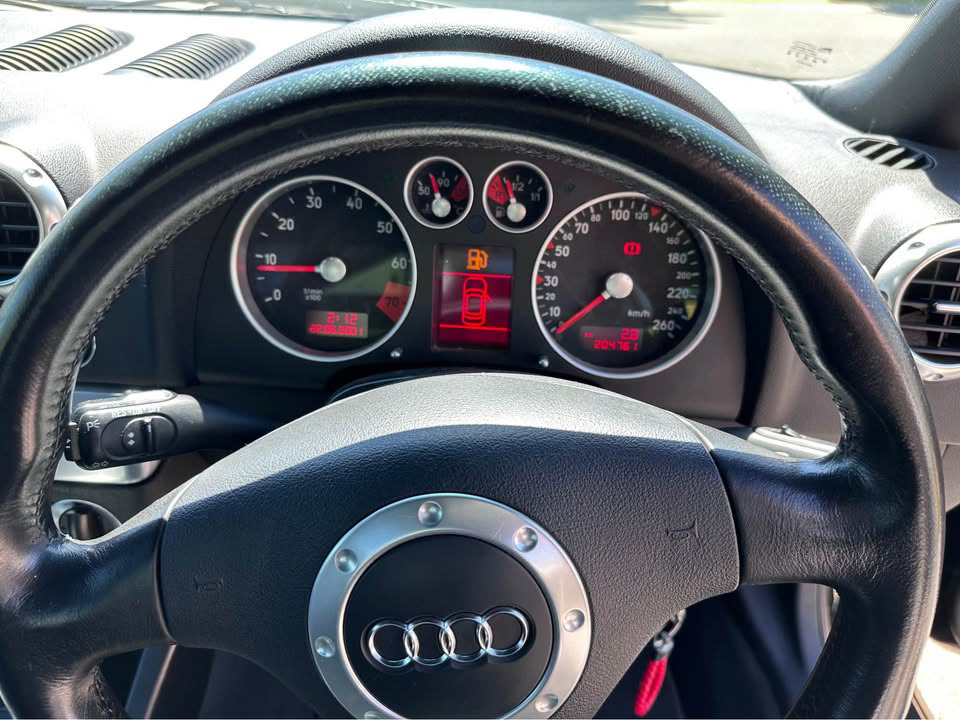
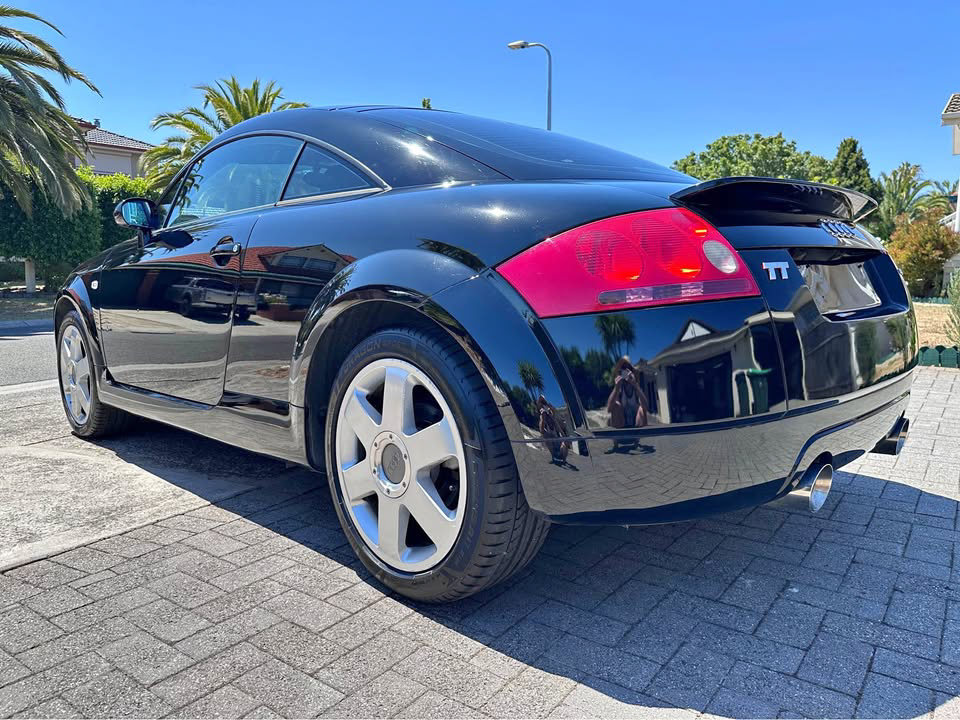
This 2002 Audi TT Coupé quattro is a first-generation Type 8N finished in Brilliant Black with a black Fine Nappa leather interior.
Built by Audi Hungaria in Győr, Hungary, it is powered by the high-output 1.8-litre turbocharged BAM engine, producing 165 kW at 5,900 rpm and 280 Nm between 2,200 and 5,500 rpm. Power is delivered through a six-speed manual transmission and electronically controlled Haldex quattro all-wheel-drive system.
The vehicle is currently undergoing a comprehensive restoration and preservation program, with an emphasis on retaining its factory-original appearance and equipment. Work includes mechanical servicing, drivetrain maintenance, wheel refurbishment, body and underbody detailing, interior restoration, reinstatement of the original Audi audio system and careful correction of previous modifications.
Once completed, the vehicle is intended for club registration, Volkswagen Club of Victoria activities, motoring events and show presentation.
HISTORY OF THE AUDI TT — TYPE 8N
The first-generation Audi TT began as a concept car unveiled at the 1995 Frankfurt International Motor Show. Its distinctive form was developed by a design team led by J Mays and Freeman Thomas, with the interior principally designed by Romulus Rost.
The overwhelmingly positive response to the concept encouraged Audi to place the TT into production with remarkably few changes to its original concept appearance. Coupé production commenced in 1998, followed by the Roadster in 1999.
The name TT drew inspiration from the Isle of Man Tourist Trophy motorcycle races and Audi’s historic association with NSU, whose sporting models had also carried the TT designation.
The TT’s design is strongly influenced by Bauhaus principles, with clean geometric forms, a sweeping roofline, circular design elements and minimal unnecessary decoration. These themes continued throughout the cabin, appearing in the aluminium-ringed air vents, instruments, switches, gear lever and other interior details.
Based on the Volkswagen Group’s transverse-engine platform, the TT shared elements of its underlying architecture with contemporary Audi and Volkswagen models. Its distinctive body, interior, suspension tuning and available quattro drivetrain nevertheless gave it a character of its own.
The high-performance 165 kW quattro version used Audi’s turbocharged 1.8-litre, five-valve-per-cylinder engine, a six-speed manual transmission and a Haldex electronically controlled multi-plate clutch to distribute drive to the rear wheels when required. This combination provided strong performance while maintaining everyday usability.
Early TT models became the subject of an important stability upgrade after concerns arose regarding high-speed handling. Audi responded by fitting a rear spoiler and introducing electronic stability control, together with suspension changes. These features became standard and distinguish later vehicles such as this 2002 example.
The first-generation TT was produced as both a Coupé and Roadster until 2006. Its combination of concept-car styling, advanced engineering and instantly recognisable form established the TT as one of Audi’s most significant modern designs and an emerging contemporary classic.

Explore our services HERE